
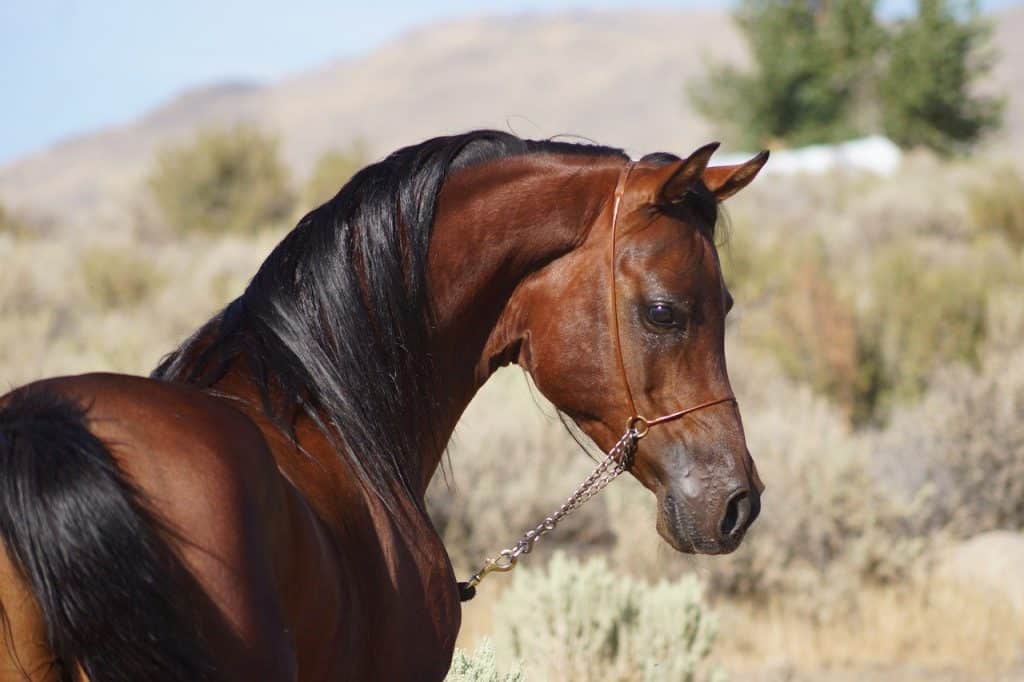
Because of their status as wild, protected feral animals in America West, the Mustang is unique among horse breeds. These wild populations are found primarily in the US Bureau of Land Management Herd Management Areas. Mustangs are not bred domestically, unlike many other equines. They are instead available for adoption by the agency.
Horse ownership is a difficult task. It can be even more difficult to handle a wild and untrained horse. With the right training, your Mustang can trust you and be a loyal companion on the job, on the trail, or in the show ring.
States with large Mustang populations may selectively breed their horses to have particular characteristics. This means that you will see a wide range of body types and temperaments.
Here are some quick facts about Mustang
| Species Name: | Equus ferus caballus |
| Family: | Equidae |
| Care Level | Variable |
| Height: | 14-15 hands (56-60″) |
| Temperament: | It all depends on the background of the horse |
| Colors: | Black, gray, chestnut pinto, roan, and bay |
| Lifespan: | Maximum 40 years |
| Weight: | 800 lbs. |
| Human Interactions | Ranch work, dressage, and trail riding |
| Shelter and Facility: | Shelter for 5-6 people with a corral area of 20’x20′ |
| Diet: | Hay forages, fresh or dried |
| Trainability: | Intelligent, fast learners, observant and quick learners |
Mustang Overview
In the 15th century, the Spaniards brought domesticated horses to America. Today’s feral population is a result of wild animals that were released unintentionally or intentionally. These horses are capable of handling all kinds of weather and are therefore strong and resilient. They are also very surefooted.
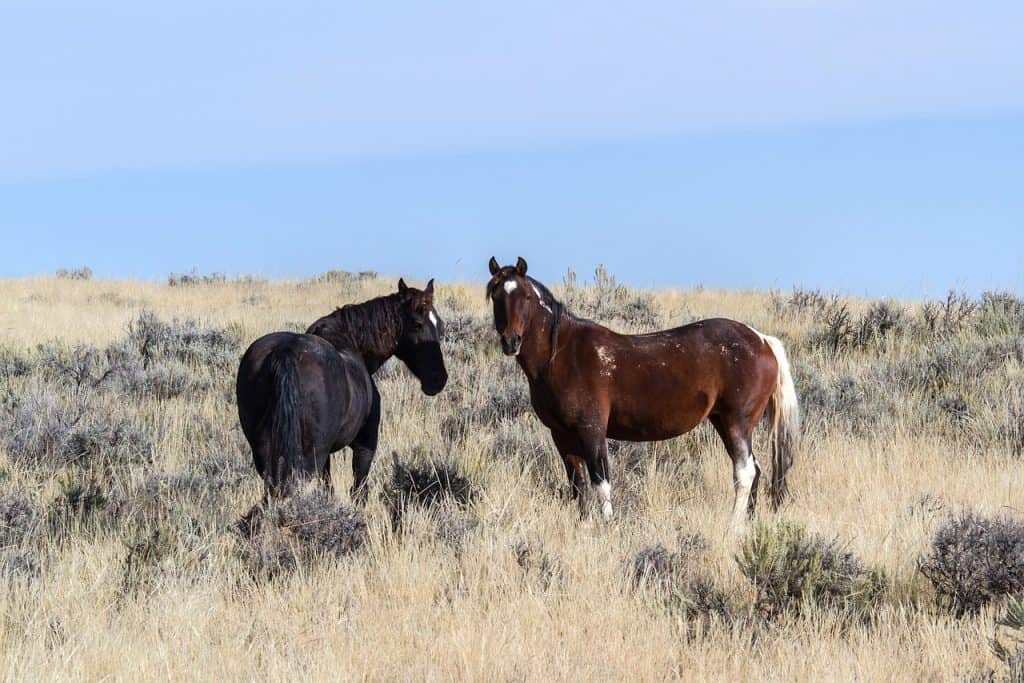
Few animals have caused as much controversy as the Mustang. Horses often live in areas that overlap with livestock ranches. Conflicts will naturally arise between ranchers and those who wish to protect these wild populations. The status of the horse as an introduced species is questioned by environmentalists. They are considered part of America’s heritage by supporters.
To protect the wild Mustang and burro population, the federal government intervened with the Wild and Free-Roaming Horses and Burros Act of 1971. The wrangling continues on both sides to this day.
What is the cost of a Mustang?
The Mustang population has risen to unsustainable levels. This has created more conflict between people with different interests. To try and control the number of animals, the BLM established an adoption program. You must have a background check, meet basic standards for facilities, and be able to transport the animal.
These requirements may vary from one state to the next and are often based on the environment in which Mustangs might be exposed in certain areas. To proceed, you must fill out an application form. For untrained animals at lottery draw events, the minimum cost is $25. A gentle and trained Mustang will cost $125.
The Typical Behavior and Temperament
Horses are prey animals, and their behavior reflects this fact. Remember that horses are prey animals and exhibit protective instincts. Some Mustangs can be easily scared, while others are more patient.
It is best to allow your Mustang to adjust to its new surroundings and ease the stress of transportation and arriving at its new home. Once the horse is comfortable with your routine, you can begin to gently train them. Remember that your horse’s fight-or-flight instincts will be the most important until you bond with them.
Appearance and Varieties
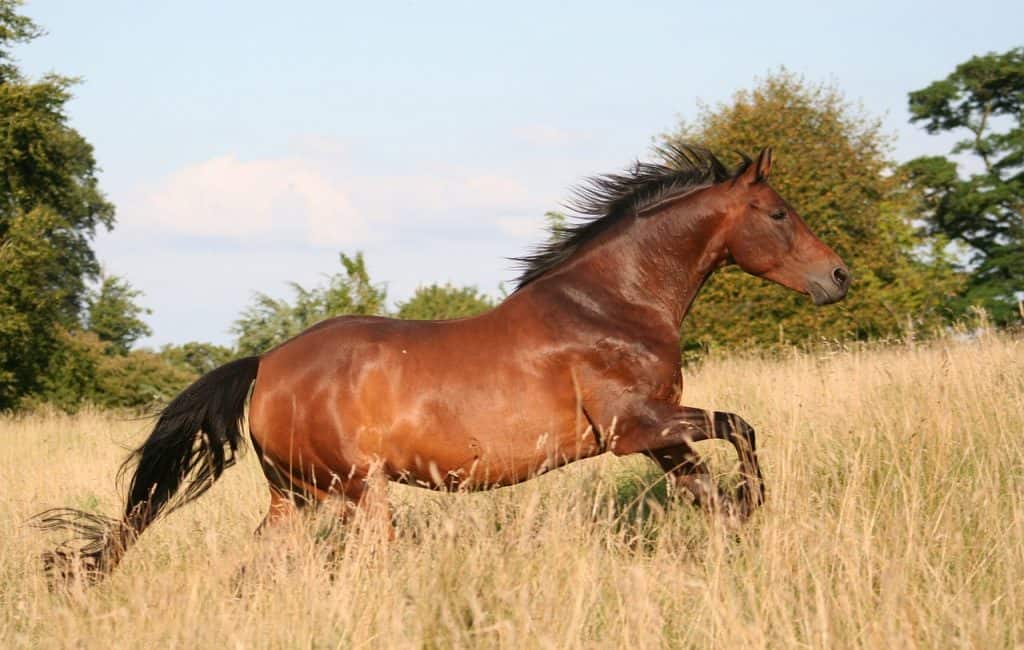
Mustangs are a stocky, smaller breed that can reach 14-15 hands in height. They can reach 800 pounds. They come in many colors, including palomino, chestnut, and black. You’ll probably see variations between horses because there is no official breed standard.
The BLM oversees 12 state-specific off-range corral adoptions and purchase centers. Because of their isolated breeding populations, these localized Mustang populations will be able to produce Mustangs with genetic variation.
How to Care for Mustangs
Shelter and Facility
Because it distinguishes between trained and untrained animals, the BLM requirements for a Mustang’s shelter and facility are a great place to start. A corral should be at least 400 square feet according to the agency. A facility should be at least 5ft high for a trained horse and 6ft for an untrained one.
You can choose to shelter your Mustang with either a natural or man-made cover, depending on where it is located. Protecting your Mustang in areas with more severe weather conditions will require something stronger.
Pasture plants
The quality and composition of your pasture plants is an integral part of horse care. A mixture of grasses and legumes will provide a balanced diet for your Mustang. The pasture will be better quality if it contains legumes. However, there are some trees and plants that can be toxic to horses.
Avoid trees such as black walnut, box elder, and maple species that are too dense for your horse’s good. Chokecherry and wild Parsnip are also problems.
Are Mustangs able to get along with other animals?
Mustangs, like other horses, are social animals. If other horses are in close proximity, it may aid with the acclimation process. However, we don’t recommend that you introduce your horse to the family dog immediately. Be aware that stressed animals are reactive, especially when they encounter unfamiliar people or animals.
What to feed your Mustang
Mustangs will graze on the grasses and shrubs in their natural habitat. You can allow them to graze in the pasture, or give them harvested hay. You should give them between 2 and 1/2 percent of their daily body weight. These horses can be opportunistic feeders. They will likely go hungry if you let them roam free in a well-managed pasture. This is the survival instinct at work, but it’s also a sure way to obesity.
Your Mustang should always have fresh water available. They can consume up to 15 gallons of water per day. A trough filled with water is better than a bucket. It will be more natural for them to drink and it will feel more like the wild. A mineral block should be provided to meet the needs of your horse for electrolytes and salt.
Keeping Your Mustang Healthy
The BLM will vaccinate and deworm your Mustang if you adopt it. Equine Infectious Anemia is also screened by the agency. When it comes to health care, the Mustang presents unique challenges.
Horses are able to travel on rough terrain in the wild. This helps keep their hoof growth under control. As a horse owner, this is your responsibility as it relates to their health. These horses have healthy hooves. This advice is also applicable to your Mustang’s dental health. Annual boosters are required for many vaccinations.
Breeding
The BLM can do health screenings for your animal but not pregnancy testing. Keep in mind that if you adopt mares, you might end up with more than you bargained for.
Are Mustangs Suitable for You?
The majestic Mustang is a magnificent animal with a long history. These animals are resilient and have survived harsh conditions, rough terrains, and the threat of predators like mountain lions. These environmental factors have had a profound impact on the evolution of these horses. These horses are not recommended for novice horse owners.
Because of their turbulent past in the wild, Mustangs are a major investment in time and effort. Building trust and ensuring the horse’s well-being takes patience and commitment. Mustangs require a lot of commitment and patience from their owners.
What makes a mustang horse so unique?
Because of its untamed background, the mustang is recognized for being tough and surefooted. Mustangs are good as working horses and trail horses because they can negotiate terrain that other breeds may struggle with.
Are Mustangs suitable for beginners?
Mustangs raised in the wild do not make suitable beginners’ horses because they require tough and experienced handling and training. They form friendly and likable companions capable of taking care of themselves after they are acclimated to dealing with people.
What is the healthiest horse breed?
Arabian horses are the most healthy breed. They are less likely to get illnesses due to their hard structure and muscular growth. They have a 25-year minimum lifetime and a 30-year maximum lifespan. Arabians are also well-known for their endurance and stamina.
What is the price of a mustang horse?
Most Mustangs range in price from $125 to $5,000. The animals adopted from the Bureau of Land Management are the least expensive. The approximate price for such a horse would begin at $125 for well-trained horses, while an untrained animal may be obtained for approximately $25.
Is it possible to merely take a wild horse?
Wild mustangs were captured and utilized for everything from rodeos to dog chow for years until 1971 legislation made it unlawful to kill or catch them.
What is the most affordable horse breed?
Wild Mustangs are the most affordable horse breed.
Mustangs are they protected?
The US Bureau of Land Management manages and protects the free-roaming horse population (BLM). Controversy surrounds the sharing of territory and resources by mustangs with ranching animals, as well as the tactics used by the BLM to regulate their population levels.
What makes it a mustang horse?
Mustang horses are the offspring of fugitive domestic Spanish horses transported to the Americas by Spanish explorers in the 16th century. The name comes from the Spanish words mestengo and mostrenco, which imply “wild or masterless cattle.”