
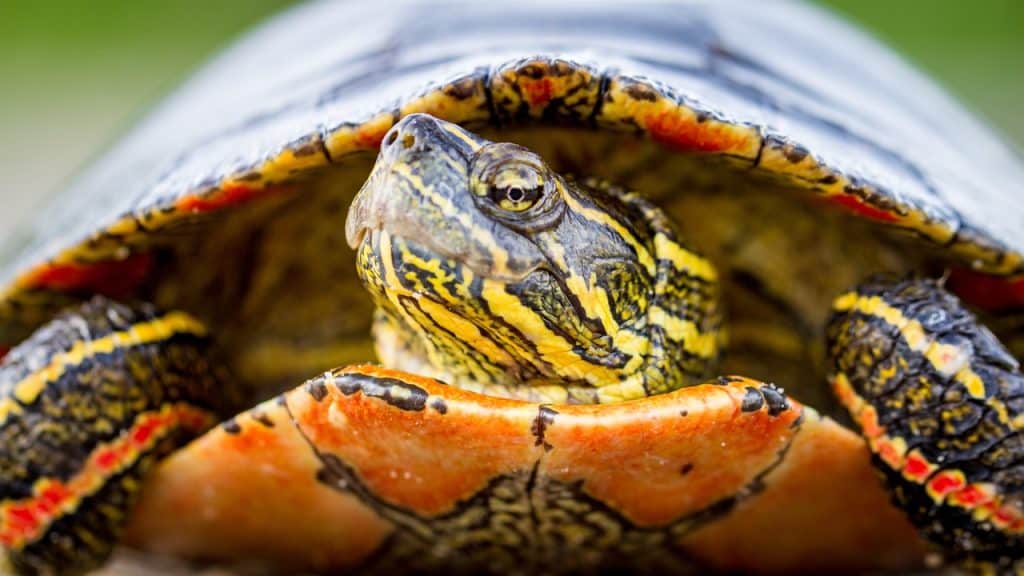
It can be difficult to choose the right turtle. It is not as easy as just picking up a turtle from a pond and placing them in a tank. Then, you have to give them lettuce. They might even enjoy the lettuce. Wild turtles are not happy when taken from their nests and placed in captivity. It’s best to get one at your local pet shop or a trusted breeder.
Which turtle should you choose?
There are many species of turtles, but the two most popular are the painted turtle and the red-eared slider. Find out which one is right for you by reading about it.
Visual Differences

The Painted Turtle and the Red-Eared Slider. Source: Scottslm. Pixabay. Right: The Red-Eared Slider. Source: manfredrichter. Pixabay.
A Glance
Painted Turtle
- Adult size: Average 6-10 inches
- Adult average weight: 18 ounces
- Life expectancy: Maximum 55 years
- Tank Size: 20-gallon minimum
- Tank cleaning: Every two weeks
- Family-friendly: Yes, provided that the situation is minimally handled
- Other pets-friendly turtles
- Temperament: Will bite and scratch, but not like human contact.
Red-Eared Slider
- Adult size: Average 6-12 inches
- Average weight (adult): 61 pounds
- Life expectancy: 20-30 years
- Adult Tank Size: 50-gallon tank
- Tank cleaning: Every two weeks
- Family-friendly: Yes, provided that the situation is minimally handled
- Other pets-friendly turtles
- Temperament: Will bite and scratch, but not like human contact.
Overview of the Painted Turtle
The painted turtle is not only one of the most common turtle breeds in America, but it’s also one of the most beautiful. These turtles have vibrant stripes all over their shells and bodies, hence the name. There are four types of painted turtles. They are the eastern, midland, western, southern, and western painted. Each one has its own distinctive markings and sizes, which makes them stand out.
While there are many varieties of painted turtles, they all have the same basic care and habits. The painted turtle is small to medium-sized, with the males being smaller. Adults require a 20-gallon tank. However, if you wish to keep more than one turtle, increase the tank size by 10 gallons or use separate containment systems.
To be at their best, painted turtles require specific lighting and temperature requirements. They need to maintain their tank water, ambient air, or basking area temperatures at different levels. It can be difficult for reptile owners who are new to the hobby to keep them at their best.
The omnivore status of painted turtles means that they can eat both plant and animal matter. When keeping them in captivity, you must keep their diet consistent. While a steady diet of leafy greens and insects will keep them satisfied, we recommend that they eat real turtle food. This will ensure your turtle receives the best nutrition.
Different types of painted turtles
There are four types of painted turtles, each with its own characteristics. Let’s have a closer look now.
- Eastern Painted Turtle: This species has an olive-green to black upper shell and pale segmentation. The turtle’s signature yellow stripe is painted on its face and the outer shell of the top shell contains red pockmarks.
- Western Painted Turtle: This subspecies is the largest, with a mesh-like upper shell and a yellow-striped face. This turtle’s main color difference is on its underside, which is brightly colored with splotches and different hues.
- The Midland Painted Turtle is the hardest to classify among the four. It looks like a mixture of the western and eastern varieties. It has the mesh-like upper shell of the western, with the beige underbelly of the eastern and the red perimeter marks.
- Southern Painted Turtle: The turtle can be easily identified from the top. Its upper shell has a vertical red stripe running along its center. Its underbelly is beige but the bottom of the shell resembles that of the western. The southern subspecies are also the smallest.
Common Health Problems
The painted turtle is not immune to diseases and can have its share of problems. Parasites are the most common problem that most people face. Parasites are naturally found in reptile internals. However, it is possible to reduce parasitic issues by keeping your tank clean. Fecal parasite examinations can help to eliminate them. These turtles can also be infected. These can also be avoided by keeping a clean tank.

Hypovitaminosis A and metabolic bone disease are serious issues. These deficiencies can be caused by a deficiency in vitamin nutrition, vitamin A, and calcium respectively. You can reduce the likelihood of your turtle getting these diseases by feeding it well-crafted turtle food.
For:
The painted turtle is a good place to start if you want to raise turtles. Although they aren’t as common as the red-eared sliders, they aren’t as large. Because they are smaller, they make it easier to maintain and clean.
Slider Red-Eared

The red-eared slider, a turtle that is native to the United States, has become a well-known species. These reptiles are very popular and can be imported into many countries as pets. The irresponsible breeding of and release of red-eared sliders has made them one the most invasive species in the world, threatening ecosystems and taking over waterways and ponds.
Many people release their red-eared sliders into the wild because they aren’t ready for the species’ eventual size. Red-eared sliders are adorable and small, just like most turtles. It may seem difficult for a new owner to envision how much larger their pet will grow. A fully grown adult can reach a height of 1 foot and weigh more than 6 pounds.
To thrive, a turtle this large needs a large tank. These turtles can be started in either 10 or 20-gallon aquariums, but we recommend at least 50-gallon tanks for one fully grown adult. You should keep at least one turtle in your tank. Red-eared sliders, whether they are of the same species or not, can be kept safely in captivity without fear of territorial fighting. It is important to be vigilant as each turtle is unique.
There are many colors and patterns available for red-eared sliders. Usually, however, they have red striping at their hidden ears. They can be purchased at an initial price of around $20, regardless of the color they are in. They will become more expensive as they get bigger and require additional equipment to house them.
Health Risks
The adorable turtle is a great reptile to watch. They are not always the most clean-cut animals. If left unchecked turtles can get very messy. You and your turtle can be exposed to many health risks. A dirty tank can cause bacterial, fungal, and parasitic growths that can contribute to shell rot, diarrhea, and other disorders.
Red-eared sliders, as well as turtles, are known to be carriers of salmonella. The majority of turtles with the disease don’t have any symptoms. It is important that you wash your hands thoroughly after handling your turtle, or cleaning its tank.
Breeding

It’s not as simple as you might think if you want to breed your red-eared sliders. It is not possible to simply pair a mature male with a female and expect the natural process to work. You will need to create the right environment and set the mood to start the breeding cycle. You will need to prepare them for hibernation and adjust the ambient temperature. Only then can you begin the mating process.
For:
If you are able to care for a turtle and are comfortable handling it at home, red-eared sliders can be a great choice. These reptiles are beautiful to look at, but they should not be handled constantly.
Which Species Is Right for You?
Each turtle has a unique attribute that makes them more suitable for different people than others. We recommend the smaller, painted turtle if you are new to turtle hunting. They will require a smaller habitat, so they are more sensitive to temperature and light requirements. This makes it easier for them to be cared for and helps them learn basic responsibilities.
If you have experience with turtles of smaller sizes and want to add a red-eared slider to your turtle lover’s home, this is a perfect choice. They are a joy to care for and a great companion to keep.
Do painted turtles recognize their keepers?
Turtles recognize their owners! Many turtles recognize the sight and sounds of their owners, which most people are unaware of! Many owners mention how their pets swim right up to the water’s surface to greet them when they walk into the room.
How long does a painted turtle live?
A painted turtle’s average life span is 20 to 30 years old, but they have been known to live for over 50 years!
How long do painted turtles live as pets?
A painted turtle can live in captivity for 20 to 25 years if properly cared for.
Do turtles enjoy being pet?
Turtles prefer to be alone and dislike being picked up and handled. Many people lose interest in turtles because they are not affectionate, do not like to be held, stroked, or cuddled, and do not play with toys.
Do red-eared sliders bond with their owners?
Tortoises and turtles can both learn to recognize their caregivers. This takes time, but turtles and tortoises are extremely intelligent. They will pick up on your scent, sounds, and actions. They’ll associate you with food and safety.
How long do red-eared sliders live as pets?
In captivity, red-eared sliders can live a long time. They can easily live for more than 20 years if properly cared for. The red-eared slider is an omnivore.
Do turtles remember their names?
Tortoises are extremely intelligent and can learn their own names. Turtles will recognize their keepers as well, primarily because they are excited that you are bringing them food.
Are red-eared sliders docile?
Red-eared sliders are friendly—at least to turtles. They have demonstrated intelligence and owner recognition, and will frequently greet their keeper during feeding time, eating out of the palm of their hand at times. Red-eared sliders are not aggressive toward humans, but they will bite if they are scared or handled roughly.