
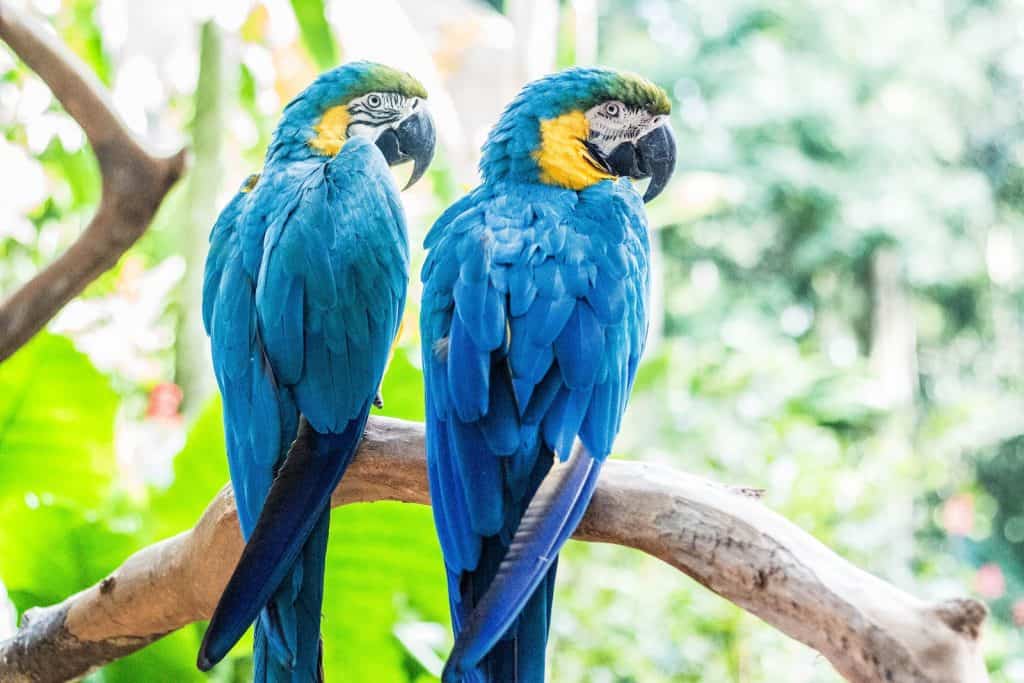
The clowns of parrot land and lorikeets are often considered to be clowns. The blue lorikeet is no exception. This assumption is supported by the species’ orange beak. Because of the introduction of predators into its habitat, and worsening storms, the blue lorikeet has been deemed to have become wild.
They make great pets. Read on to learn more about the blue lorikeet, his personality, how to care for him, and what to feed him.
Species Overview
| Common names: | Blue Lorikeet, Violet Lorikeet, Tahitian Lori, Blue Lori, Nunbird, Indigo Lori |
| Scientific Name: | Vini peruviana |
| Adult Size: | 18 cm |
| Life Expectancy: | 10 years wild, 20 years captivity |
Origin and History
The Cook Islands and French Polynesia are home to the blue lorikeet. This adorable bird was once found on at least 23 Tahiti islands. It’s now found on eight islands, including Motu, Harvey, and maybe others.
These birds are found in forests, coconut plantations, and gardens with lots of mango and banana trees.
The blue lorikeet, as previously stated, is endangered. If you do get one, be sure to take good care of it with love, affection, and patience.
Temperament
Blue lorikeets can be aggressive towards toys and other items that they consider his. If they feel that their territory is being invaded or threatened, they can get angry.
Your blue lorikeet’s tendency to bite is one of his behavioral challenges. You’ll need to curb his tendency to bite family members that he doesn’t like.
Blue lorikeets, like all parrots, have a tendency for screaming. This species’ voice is quite loud. If they are young enough, it is possible to train them not to scream.
Blue lorikeets make great pets, but you will need to properly train them and spend lots of time with them. They can be playful and energetic, and they can also be very entertaining to watch when they are being mischievous.
- Energetic
- Playful
- Fun to see and mischievous
- Territorial can be possible
- Probleme with chewing and biting
Vocalizations & Speech
The blue lorikeet’s speech and vocalizations are almost identical to other lorikeets. They make a loud, repetitive call with a high-pitched whistle.
This species has a very distinctive sound that you will want to control.
Blue Lorikeet Markings and Colors
The colors and markings of the blue lorikeet are stunning. Their main color is either deep purple or blue. Both male and female adults have orange eyes, yellow or brown bills, and either orange or deep purple for their skin. The species’ lighter blue color is found on the occiput, crowns, and their upper breasts are white.
The underparts of young blue lorikeets are blue or deep gray and they have no white coloring. Their eyes are dark brown and their bills black.
Caring for the Blue Lorikeet
You have probably made a decision whether or not you want to buy a blue lorikeet for your pet. Once you’ve decided that you want to keep one of these beautiful birds as your pet, you will need to learn how to care for them. We’ll show you how to care for him in this section.
Before you bring your pet home, there are some things you will need. These will be listed below.
- A clean cage
- A cage cover
- A food bowl
- A carry cage
- Rice recipe
- Vitamins
- Disinfectant
- Spray for lice and mites
- Perches
- Perches natural
- A parrot pad
- Cement perches
- Foraging toys
- Ladders
- Toys with vibrant colors
- Play stand
- Litter
You will need a lot to keep your blue-lorikeet healthy and happy. You should ensure that your pet has enough space to move around and to spread his wings when he needs to.
You need to be active
If your pet starts to get bored, he will start to scream and chew on things he shouldn’t. Your lorikeet should be allowed to get out of his cage each day in order for him to fly and spend time with you. You should never leave your pet alone for too long. Lorikeets love to be with people and can get upset if they’re not allowed to.
To keep your pet entertained, make sure he has lots of toys such as the ones listed above. Blue lorikeets are intelligent and can easily get bored if they have nothing to entertain them.
Common Health Problems
The blue lorikeet is just like any other pet bird or pet, and there are potential health issues to be aware of.
Blue lorikeets should be aware of the most common health problems, psittacine feather disease, and beak disease. This is the most fatal disease that a lorikeet could contract. This virus originated in South Australia. It’s not the virus that can kill your pet; it’s secondary complications caused by the virus.
It spreads through bird droppings, secretions, and dust. These diseases can be transmitted to birds that have come into contact with them through their drinking and feeding bowls. For treatment, contact your exotic vet immediately if you have concerns about your blue lorikeet.
Diet and nutrition
Nectar should be a major part of the diet for your blue lorikeet. It doesn’t matter if you make it yourself or buy it in a shop, nectar is essential for your bird’s health. Clean water, honey, cereal, and cereal are essential. Apples, pomegranates, and sweet corn are all possible additions to the mixture.
However, do not give blue lorikeet eggs as protein-rich foods can be toxic to the species.
Exercise
Playtime is a good way to get your blue lorikeet exercise, just like other parrots and lorikeets. To be happy and healthy, your pet should spend at least 4-5 hours each day outside his cage. For optimal health, spend time with your blue-lorikeet.
Places to adopt or buy a blue lorikeet
Blue lorikeets can be found at many breeders around the world. They should also be available at your local shelter for adoption. Many people dream of having a blue lorikeet as a pet, but then realize they don’t have enough money or the time or ability to care for it.
Always ensure that you only purchase or adopt your blue-lorikeet from an established breeder. Make sure you do your research before you decide on the right breeder for your pet.
Your breeder and the shelter where you keep him will determine how much your blue lorikeet will cost. You can expect to pay anywhere from $250 to $750 for a blue lorikeet. Make sure you understand what you are getting into. It’s a large investment that could prove costly if you decide later that you are unable to take care of your son.
Conclusion
This concludes our guide to the blue lorikeet species and all you need to know to care for them as pets.
Always buy your pet from a trusted breeder. If you can, consider adopting them from a local shelter. As long as the blue lorikeet is properly trained, he will make a great pet. If you decide to adopt this bird species, make sure you have the patience, time, and love they need.
What is the most elusive lorikeet?
Because the species is only known from a few specimens captured in 1859 and another in 1913, the New Caledonian Lorikeet has long been considered uncommon. As a result, the New Caledonian Lorikeet is tied with the Glaucous Macaw as the world’s rarest parrot.
How can you know whether a lorikeet is male or female?
Male and female lorikeets have identical feathering and coloring, making it hard to tell them apart. In a pair of the same age, the male is normally significantly bigger. The only sure method to know is to have your veterinarian do a DNA test on droppings or feathers.
How often should a lorikeet be fed?
Food should be provided at least twice a day. Due to the nature of the lory’s feeding habits, you should feed your bird at least twice a day.
Do lorikeets consume bananas?
Fresh, seasonal fruit such as apple melon, grapes, citrus, pawpaw, banana, mango, lychee, stone fruit, and so on should also be available. Some veggies can be provided, but the lorikeets have a tendency to ‘pigout’ on sweet corn, so don’t overdo it. Never feed fatty, salty, processed human meals to your dog.
How can you determine how old a lorikeet is?
Some breeders employ leg bands that show the bird’s birth year, making it simple to determine the age of a rainbow pet bird. The year is commonly represented by two vertical numerals, while the rest of the information on the band is displayed horizontally.
How long does it take a lorikeet to mature?
Smaller species survive 12-15 years in captivity, whereas bigger species live 25-35 years. They are excellent breeders.
Do lorikeets become tipsy?
Mango, umbrella, and other trees in northern Australia can induce minor intoxication in birds when the fruit or nectar ferments at different times of the year. Many of the lorikeets brought to the hospital, however, are fully sloshed, and sometimes for days at a time.
How much do lorikeets cost?
The price will vary depending on the type of lorikeet you buy. Rainbow Lorikeets are the most common and often the least expensive. Because many breeders specialize on these birds, the prices are cheaper. Burke’s Backyard Lorikeets can range in price from $100 to hundreds of dollars.