
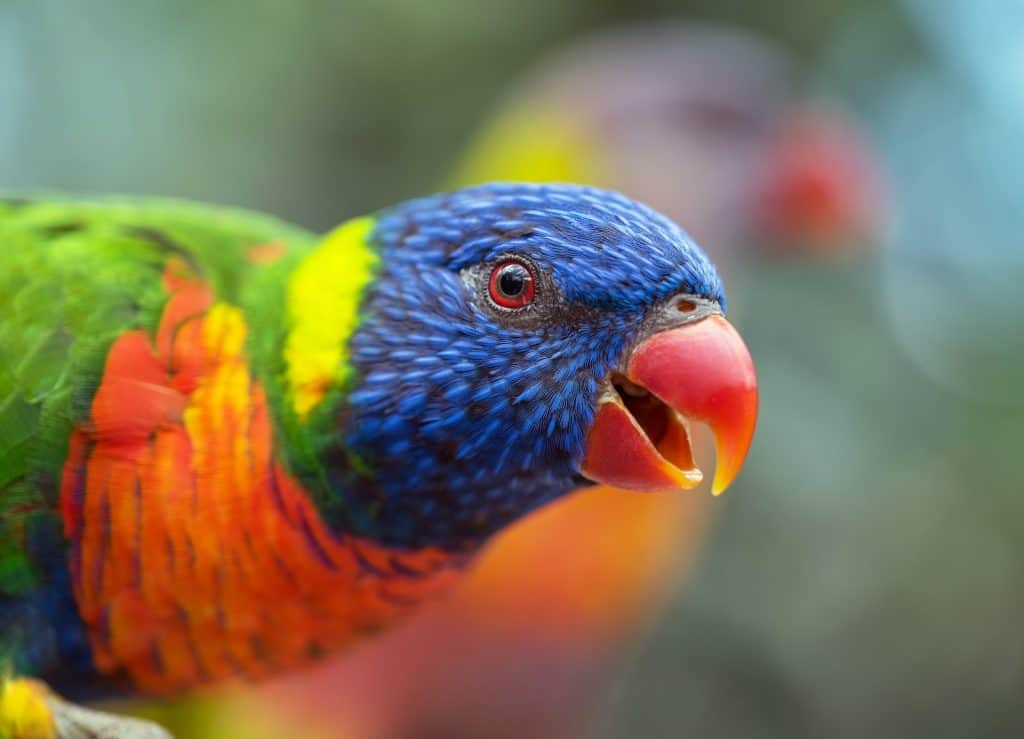
One of a kind, Goldie’s Lorikeet. This colorful, tiny member of the parrot family is unique in the genus Glossoptilus. This adorable parrot is a joy to keep as it displays the most adorable behaviors such as wrapping itself in a blanket to go to sleep.
This is not an easy-to-learn pet bird. It is not recommended for those with less experience in caring for winged pets due to its unique dietary requirements. If you are up for the challenge, this little watermelon-colored bird will be your best friend. Continue reading to learn more about the bird’s personality, care, and dietary requirements.
Species Overview
| Common names: | Goldie’s Lorikeet |
| Scientific Name: | Glossoptilus goldie |
| Size for Adults: | 7 1/2 inches |
| Life Expectancy: | Captivity: 11-15 years |
Origin and History
Andrew Goldie, a Scottish ornithologist, discovered this tiny treasure with shimmering plumage. He first saw it in New Guinea’s lush forests. Richard Bowdler Sharpe, another ornithologist described Goldie’s Lorikeet in 1882. It was given the scientific name Trichoglossus Goldie by Sharpe, and it was placed in the genus Psitteuteles. A recent phylogenetic analysis published in 2020 has moved Goldie’s Lorikeet into Glossoptilus. It is now the sole king of its kingdom until more species are discovered.
Temperament
Goldie Lorikeets, gregarious birds, love to fly in groups of up to 30 in their natural habitat.
These adorable birds are great pets because of their calm and easygoing personalities. They can be quiet, shy, or playful and are happy to spend time with other birds of the same species. Goldie’s Lorikeets are able to be kept as either a single pair or as a group in an aviary of mixed species. It is fascinating to watch their interactions with their cagemates.
Even though they have a lower skill level than other parrots in imitating human voices, some lorikeets can make you smile with their little voices that reproduce sounds.
- Quiet
- It’s not messy
- Playful
- A little shy
- Particular dietary requirements
Vocalizations & Speech
Although Goldie’s Lorikeet is known for many things, its call is not. It is one piercing, high-pitched, and without harmony.
However, there is some disagreement among owners: Some claim that Goldie’s Lorikeets emit pleasant chirps and rarely make high-pitched calls. This could be because they keep two individuals at once, so the lorikeets are more comfortable interacting with each other and have less need for you to pay attention.
It is not possible to predict the vocalizations of your lorikeet, but it is likely that they will be happier and quieter if they are surrounded by other Goldies.
Goldie’s Lorikeet Colors & Markings
It is easily identifiable among other parrot species, Goldie’s Lorikeet. The plumage includes a beautiful, striking plumage with a pale green belly and yellow spots, dark green feathers on the back, purple cheeks, indigo feathers around the eyes, and a pretty scarlet-colored forehead.
There is sexual dimorphism, just like in other birds: adult females have duller reddish foreheads than the rest of their plumage.
This species is also free from any known natural mutations or other color variations.
Caring for the Goldie’s Lorikeet
Housing
Goldie’s Lorikeets can thrive in large cages and, ideally an aviary. The aviary should be at least 40 inches tall by 30 inches wide. If you intend to, which you should! If you plan to purchase more than one, make sure you get a larger cage.
This species likes to curl up in a nest and sleep. Make a bottom nest with holes, at least 4 inches in height. The nest can be filled with wood chips or a substrate. You must cover the bottom of your aviaries with enough sand to allow for 8-monthly changes.
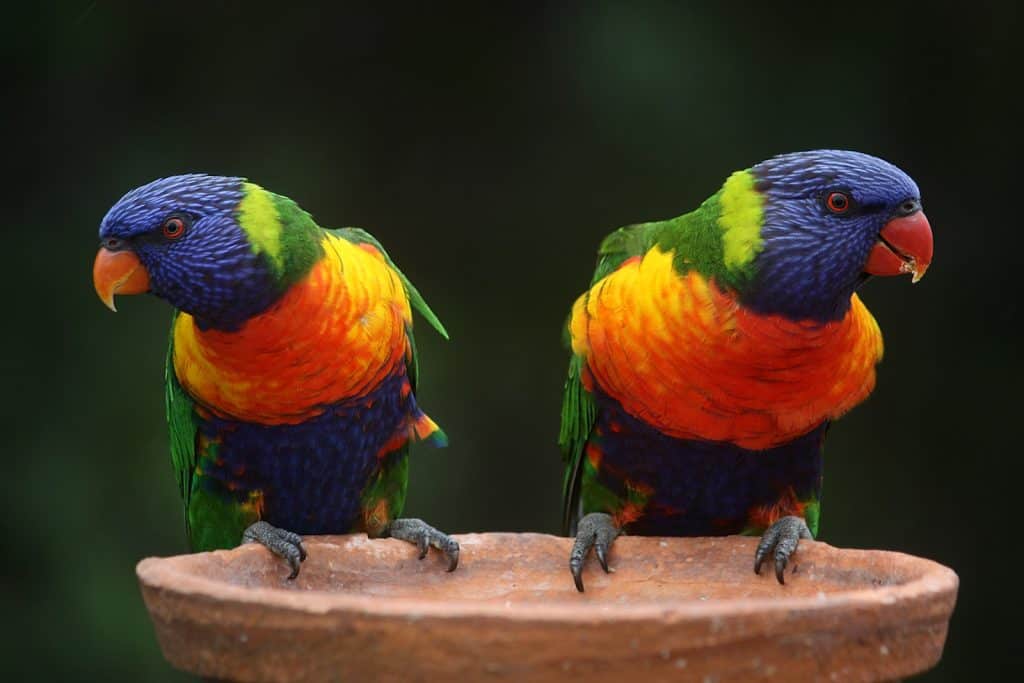
Enrichment
The cage should be designed to entertain Lorikeets. You can decorate their cage with perches, tree branches, and toys that suit this species of bird.
Temperature
Temperatures between 59 and 77 degrees F are acceptable for Lorikeets. If you live in colder climates, it is necessary to provide a heater in the area where the cage or aviary is situated.
Grooming
These little clowns love to play in the water every day. You can make a small birdbath for them to enjoy their show!
Keep the cage and accessories clean to avoid the growth of bacteria or other undesirable guests. You can avoid many diseases and other health problems by keeping your environment clean.
Common Health Problems
Goldie’s Lorikeets are able to live up to 15 years in captivity. These birds are small and healthy but can have health issues similar to parrots.
- Psittacine feather and beak disease (PBFD).
This viral disease causes severe feather loss, atrophy in the legs and beak, loss of pigment, and bloody shafts. It affects most bird species, but it is particularly common in juveniles.
It is also highly contagious. You should immediately quarantine any bird that is infected. To stop the spread of disease and prevent your bird from suffering unnecessary pain, it may be recommended that you euthanize them. PBFD is not currently treated.
- Psittacosis:
Psittacosis can be described as a zoonosis. It is an infectious disease that can be transmitted to humans by contact with sick birds. Psittacosis symptoms include weight loss, diarrhea, difficulty breathing, weakness, and difficulty swallowing. To eradicate the disease, it is important to disinfect the entire cage.
There are not many reliable sources that can provide information on other diseases Goldie’s Lorikeet might be suffering from. Your veterinarian should be consulted at least once per year to ensure your bird is healthy. Even if your bird seems healthy, a physical exam is a good way to identify potential health issues early. Because signs of illness are often not obvious until the bird is extremely sick or unable to hide them, this is why it is important to have a physical exam. He may puff up his feathers, have trouble breathing, become lethargic, lose weight or stop eating altogether.
Please contact your veterinarian immediately if you see any of these signs in your lorikeet.
Nutrition and Diet
The nutritional requirements of Goldie’s Lorikeets are very specific. These lorikeets, unlike other birds, eat mainly nectar, pollen, and berries, which is quite different from other species.
This specialized diet has given lorikeets a unique tongue. It has papillae on the end, which make it look like a brush. They use it to find food. When you interact with your bird it might use its tongue for exploration of your hands. This is a great way to strengthen your relationship with your little lorikeet.
Honey, fruits, honey, papaya, and cantaloupe are all favorites of Lorikeets, as well as some vegetables. Their diet also includes flowers such as dandelions and marigolds. All fruits, vegetables, flowers, and plants must be organic and free from pesticides.
Summary: In captivity, Goldie’s lorikeets should be fed the following:
- Clean, fresh water
- You can buy this product at some specialty pet shops.
- Fresh fruits and vegetables
- Semi-liquid homemade pate made from apple, pollen, or rice, dates, and drizzled with honey.
You can also buy specific food for your lorikeets from specialist pet shops and specialty stores.
Exercise
Goldie’s Lorikeets require a lot of time outside their cages each day. They also need to be able to bathe in a large enclosure. At a minimum, they should be kept together in pairs. They should be kept in pairs if possible.
Places to Adopt or Purchase a Goldie’s Lorikeet
The Goldie’s Lorikeets can be difficult to find. Research local breeders and don’t hesitate to ask questions about their breeding practices and the temperament of your chosen bird. A baby Goldie Lorikeet can cost between $250 and $1,000 depending on where you live and the breeder.
Conclusion
Few birds are as cute as Goldie’s Lorikeets. Due to their special diet, they are not suitable companion birds for beginners. Adopting a parakeet, or another species of parrot would be a better choice if you want to chatter all day with your bird. If you’ve done your research and are ready to adopt Goldie the Lorikeet, you will fall in love with its quirky charm!
What is the most elusive lorikeet?
Because the species is only known from a few specimens captured in 1859 and another in 1913, the New Caledonian Lorikeet has long been considered uncommon. As a result, the New Caledonian Lorikeet is tied with the Glaucous Macaw as the world’s rarest parrot.
How can you know whether a lorikeet is male or female?
Male and female lorikeets have identical feathering and coloring, making it hard to tell them apart. In a pair of the same age, the male is normally significantly bigger. The only sure method to know is to have your veterinarian do a DNA test on droppings or feathers.
How often should a lorikeet be fed?
Food should be provided at least twice a day. Due to the nature of the lory’s feeding habits, you should feed your bird at least twice a day.
How can you determine how old a lorikeet is?
Some breeders employ leg bands that show the bird’s birth year, making it simple to determine the age of a rainbow pet bird. The year is commonly represented by two vertical numerals, while the rest of the information on the band is displayed horizontally.
Do lorikeets consume bananas?
Fresh, seasonal fruit such as apple melon, grapes, citrus, pawpaw, banana, mango, lychee, stone fruit, and so on should also be available. Some veggies can be provided, but the lorikeets have a tendency to ‘pigout’ on sweet corn, so don’t overdo it. Never feed fatty, salty, processed human meals to your dog.
Which lorikeet is the largest?
The rainbow lorikeet is the most well-known, as well as the largest and brightest.
How much do lorikeets cost?
The price will vary depending on the type of lorikeet you buy. Rainbow Lorikeets are the most common and often the least expensive. Because many breeders specialize in these birds, the prices are cheaper. Burke’s Backyard Lorikeets can range in price from $100 to hundreds of dollars.
Why do lorikeets make such a racket?
These lorikeets are noisy communicators because they normally hang out in huge groups, so they have a lot of other sounds to compete with! Before the Rainbow Lorikeets begin nesting, it is not uncommon to observe males locked in combat, rolling in the dust on the ground.
What do you name a bunch of lorikeets?
Chattering or a flock is the most common collective noun used to describe a group of Rainbow Lorikeets.
What makes a parrot different from a lorikeet?
The distinction between the two is comparable to that between a parrot and a parakeet. Lory is a bird with a short tail, whereas lorikeets have a long tail. The terms are interchangeable; in their native Australasia, all species are typically known as lorikeets.