
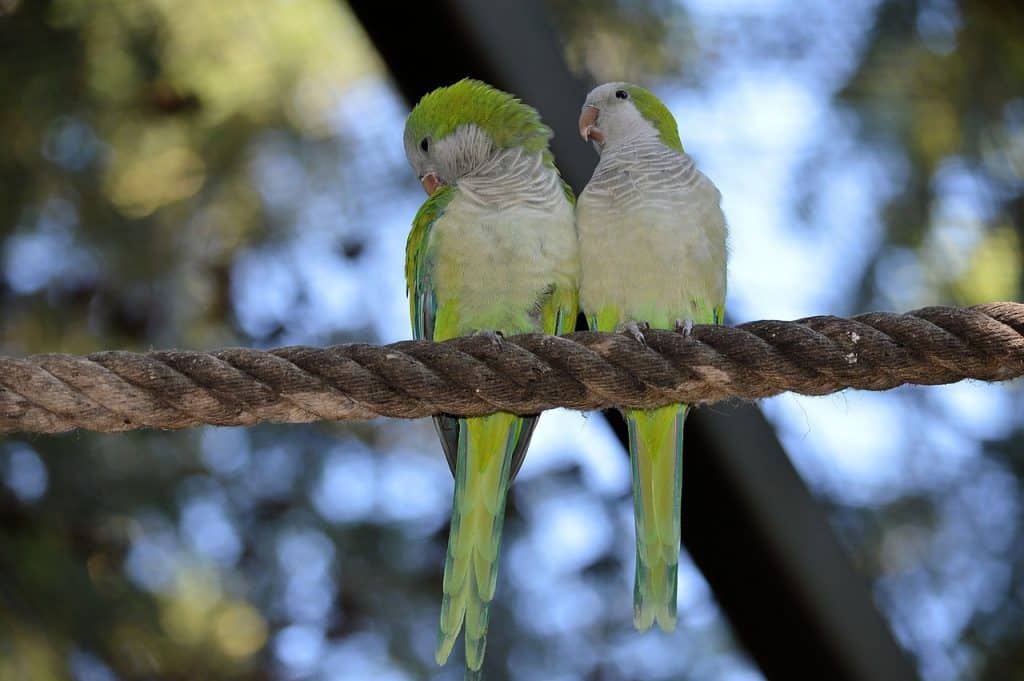
Although being a lovebird can be very enjoyable, they require a lot more care and attention than any other animal. You must consider the financial and time commitments required to provide a happy and safe environment for your lovebirds. This is in addition to the initial purchase price. You should treat your lovebird as a family member. This is how to find out the cost of owning lovebirds.
Moving a new lovebird home: one-time costs
You will need to shop around to find the best price for your lovebird. This fascinating bird species can be purchased for as little as $100. Below is a list of the most popular purchasing methods and price points to purchase the lovebird.
No cost
By looking through local newspapers and other online advertising platforms, you may be able to find a lovebird free of charge. Another place you can find a loving bird in need of a home is social media. Your local community might be interested in rehoming a lovebird. Even if you don’t see any ads for lovebird owners, it is not a bad idea to put up your own advertisement to let others know your intentions. You might just get a reply!
Adoption
Adopting a lovebird from a rescue center is different than buying one from a breeder. These rescue facilities don’t care about making money. They simply want to cover the cost of caring for and preparing an animal for a new home. You could spend anywhere from $20 to $100 to adopt a lovebird depending on how it was treated, how long it has been there, and what skills it already has.
Breeder – $25 – $1500
The largest financial investment will be required when buying from a breeder. When pricing their lovebird, a breeder will take into account the bird’s species, talk and whistling abilities, color and markings, as well as general disposition. A breeder can charge you anywhere from $25 to $150 for a lovebird. Some lovebird species can even fetch as high as $1500. The rarer the bird, the more it will be able to interact with its new family members.
4 species and their average cost
| Peachface Lovebirds | $25 |
| Masked Lovebirds | $30-50 |
| Fishers Lovebirds | $50-75 |
| Abyssinian Lovebirds | $100+ |
Stock
You will need to have a lot of supplies on hand for lovebirds of all types. You don’t need everything at once. You will need basic housing, toys, food, and water. To improve your lovebird’s quality of life, you might want to add to our list.
Cost and List of Lovebird Care Products
| Caged Habitat | $30-$100 |
| Habitat Cover for Cold/Sun Protection | $30-$50 |
| Habitat Litter | $10-$20/month |
| Cuttlebone | $10-$15 |
| Nail Clipper (optional) | $5-$10 |
| Litter Scoop | $5-$10 |
| Toys | $50 |
| Carrier | $50 |
| Food and Water Bowls | $10-$20 |
Health Care
Every lovebird, just like every other pet, needs to be seen by a qualified veterinarian for healthcare. As with cats and dogs, they should get regular checkups and vaccinations. Healthcare costs can be expensive. Expect to spend between $50- $5,000 per year depending on the health of your lovebird and whether they have any health issues or are in an accident.
Take a look at these Check-Ups
- $25-$100 annually
It is normal to bring your beloved bird in for checkups at least once a year, depending on its age and health conditions. You will usually pay around $25 for each visit unless you have to pay for medications or other medical treatment costs.
Vaccinations
- Initially, up to $100 annually; then, less than $50 per annum
It is important that lovebirds get all their vaccines while they’re still young. This can be costly, as it can cost $100 per year for the first two years. You may have years without having to pay for vaccinations. However, there are years when you will need them.
Treatments for Parasites
- $10-25 per annum
Parasites can occur in lovebirds, and they are easily treated at home using prescription or over-the-counter medications. To keep your lovebird healthy, ensure that they have clean surroundings and that their feathers are not clogged with dirt. A monthly or quarterly treatment may be required to treat parasites in lovebirds, even if they are well-cared for.
Emergencies
- $250-$2,000
You never know what could happen so make sure to save a few hundred dollars in case of an emergency. You can save a few hundred dollars to help your beloved bird pay for emergency services. This will allow you to have enough time to get the money needed. When it comes to emergency situations, the more money you have saved is better.
Food
- $10-$25 per month
Commercial pellet food should be the main source of nutrition for lovebirds. You can also offer a couple of tablespoons of grains and seeds. A quarter of the diet should consist of fresh fruits and vegetables like oranges, pineapples, carrots, celery, and carrots. If they are properly minced, kitchen scraps can be acceptable for your bird’s fruit and vegetable foods.
Environment Maintenance
- $50-$200 annually
A lovebird needs to be cared for with a constant supply of litter, deodorizer, toys, and food. These are the environmental maintenance expenses you can expect to incur while caring for your lovebird all year.
| Cage | $25/year |
| Plug-ins or sprays of deodorizing | $15/year |
| Toys | $15-$35/year |
| All you need for your bathing needs | $5-$10/year |
| Perch maintenance | $0-$25/year |
Entertainment
- $0-$100
Entertainment is something you can do whatever you like. You can entertain your lover without spending any money. All you need is some cardboard boxes, paper bags, and other household items to make homemade toys that they will love. You can spend as much as $100 on toys that are already in stock to entertain your lovebird all day.
The Total Annual Cost to Own a Lovebird
- $25-$500
You may need to spend thousands on your pet lovebird in extreme cases. Depending on what kind of lifestyle you choose, your pet lovebird will cost you anywhere from $25 to $500.
How to Own a Lovebird with a Budget
If you’re willing to find floor coverings from the outdoors for your lovebird’s cage and create toys out of items you have lying around, it is possible to keep a lovebird in captivity while keeping a tight budget. Professional healthcare is something that every lovebird deserves.
Lovebird Care: Save Money
If you are able to hunt wild fruits, seeds, nuts, greens, and grains in your area, it is possible to save money on lovebird care. You can also find free food for your lovebirds in a nearby forest reserve. For your lovebird, you can also grow carrots, cantaloupe, and collard greens throughout the year. You can also save money by making your own perches from tree branches and swings out of wire coat hangers.
Conclusion
We have concluded that the lovebird is beautiful and fun to look after. They are adaptable and can get along with other birds. Do you want to adopt a lovebird? Do you want to adopt a lovebird? Leave a comment below to let us know what you think. We’d love to hear your thoughts!
Can you buy only one lovebird?
Lovebirds shouldn’t always be kept in Pairs While it is true that they are exceptionally sociable birds that thrive on connection and must be socially stimulated, solitary lovebirds should be kept in many circumstances by bird owners.
Is it permissible to keep love birds in a cage?
A pair of love birds (love birds Vastu) can be kept indoors, but their cage should be positioned towards the northeast direction of the home.
Do birds become depressed in a cage?
Caged birds, like chained dogs, seek friendship and freedom, not the brutal reality of forced solitary confinement for the duration of their extremely long lives. Caged birds often become hostile and self-destructive as a result of boredom and loneliness.
Which bird is fortunate to have at home?
Parrots are regarded as lucky by Vastushashtra because they offer good health and affection to the people of the dwelling. Parrots should always be kept facing north. Love birds are also fortunate and should be kept in a cage facing North-West, North-East, or East. Do birds suffer from depression in cages? Because of confinement, some birds grow sad or angry, even mutilating themselves or one another.
How old are love birds?
What kind of food do lovebirds eat?
In the wild, lovebirds eat a range of seeds, fruits, berries, and plants such as leaf buds. Some species have been observed attacking farmers’ crops and are classified as pests in their native habitat.
How long do lovebirds stay in their cages?
With that caveat out of the way, we are pleased to inform you that lovebirds in captivity live far longer than wild lovebirds. With appropriate care and a little luck, your lovebird might live for up to 20 years! Ages of up to 25 or more have been documented in rare circumstances.
What is the best way to train a lovebird?
Is it better to obtain one or two lovebirds? While lovebirds create strong pair relationships, keeping a single bird is better if you want a pet that wants to engage with you. This will help the bird bond with you.