
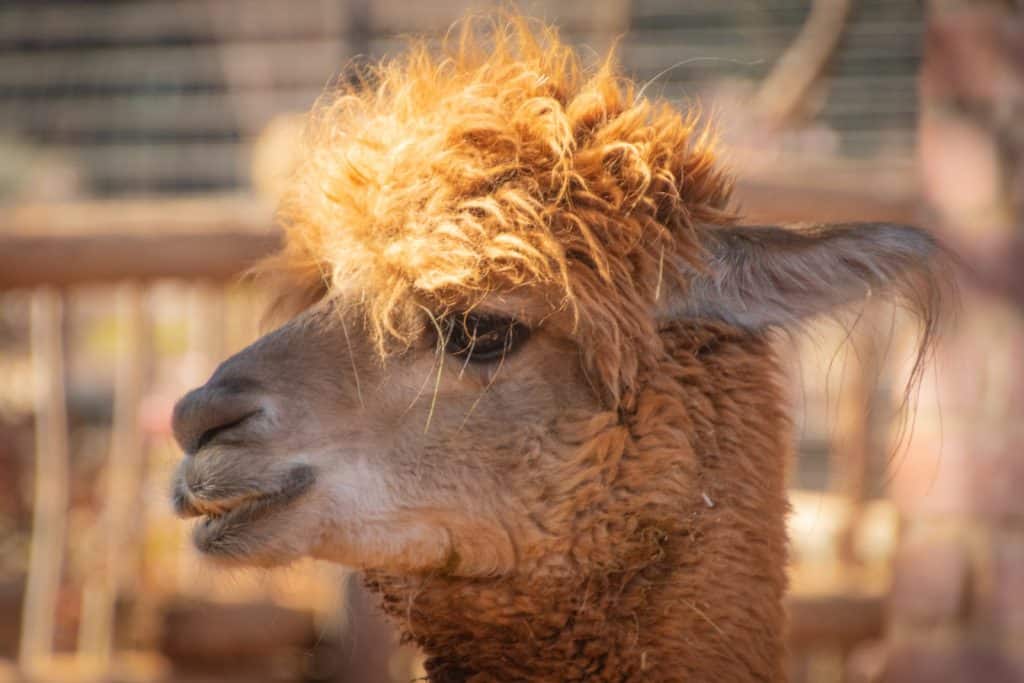
The Suri alpaca, a fully domesticated alpaca, is a purebred that comes from the Vicuna (a protected wilderness in the Andes Mountains). Suri alpacas are one of two types of alpacas, the other being the Huacaya. Suri alpacas can be tough and have a soft fleece which makes them stand out from Huacayas.
Suri is thought to be less than 10% of all alpacas worldwide. This is why they are rare and special breeds of alpacas to keep as pets or to farm. This article contains all you need to know about this amazing alpaca breed.
Suri Alpacas: Quick Facts
| Name of the breed: | Suri |
| Where is it from? | South America |
| Uses: | Pets and farming |
| Macho (Male) Size: | 130-150 pounds |
| Hembra (Female) Size: | 120-145 pounds |
| Color: | Black, fawn, and red, as well as grey, white and brown |
| Lifespan: | 12-20 years |
| Climate Tolerance: | Regions that are humid |
| Care Level | Moderate |
| Production: | Fleece |
Suri Alpaca Origins
Suri alpacas are part of the camel family which descends from Peru, and South America. Suri alpacas’ ancestors, who closely resembled llamas, were believed to have originated from the central plains in North America millions of years ago. These llama-like ancestors moved to South America, where they developed into the Suri alpaca that we know today. Many believe that Suri alpacas originated from Indians who lived in the Andes Mountains, which are part of the Suri alpaca’s natural habitat.
Many desirable traits are found in the Suri alpaca. The Suri alpaca breed is easy to take care of and requires less maintenance than other livestock. The thick, insulating fleece of the alpaca breed allows it to thrive in both hot and humid environments. This fleece can trap heat in the summer so they may need to be shared. The Suri alpaca can tolerate a wide range of conditions. This breed is easy to raise worldwide.
Suri alpacas are known for their fleece. It is considered a luxury item around the globe. It is not like the crimpy fleece that you might see on other alpaca breeds. Instead, it is straight or wavy with a shiny, soft texture.
The Suri alpaca temperament can differ depending on how they have interacted with humans in the past. If an alpaca has been exposed to negative human interaction, it might be a timider around its handlers or owners. Some Suri alpacas can tolerate human interaction better than others and will not be afraid to interact with humans. If you plan on keeping the Suri alpaca for a pet, this type of personality is more appealing.
Uses
Suri alpacas are primarily raised for their fleece, which can be used to make a wide range of clothing and other products for humans. Suri alpacas are mostly imported because of their fleece quality. This breed can be found in many states, where they are either kept as pets or bred for fleece production.
Appearance and Varieties
Suri alpacas produce luxurious fleece in 22 colors. These can include grey, deep black, and many other shades such as fawns, reddish browns, roans, and dark browns. Suri fleece is also a luxury item due to the many colors it can available. Suri alpacas can also produce true black fleece which is often used for weaving. True black Suri alpaca fleece can be expensive so it is sold only as luxury clothing. It is difficult for farmers to produce enough Suri alpacas that are true black to supply the demand.
Suri alpaca fleece is close to the body. It has a flowing texture that gives it a luxurious, flat-sided appearance. Suri alpaca fleece comes in four styles. The locks should be at the skin, compact, and straight. The fleece should be oriented towards the head, and then move down the body from the neck to the legs. It should feel cool and soft, and not be too oily.
Population/Distribution/Habitat
This alpaca breed can be found in the Andes mountains of Peru and Chile. Suri alpacas prefer mountains between 9,800 and 15,750 feet in elevation. They live in the grassy shrubland of the mountains, which is their natural habitat.
Suri alpaca fleece is now available in North America, Alaska, Canada, and Maryland. Because of their excellent tolerance to climate change, Suri alpacas can be kept in many different climates.
Are Suri Alpacas good for small-scale farming?
Suri alpacas can be used by both small-scale farmers and large-scale farmers. These alpacas can be started with a breeding pair so they can continue to breed over time to make a small herd. They will need to be sheared regularly during the summer months to ensure they don’t overheat. The fleece left can then be weaved into clothing. Suri alpacas are a popular choice for pets. They are easy to care for and have a friendly temperament.
How uncommon are Suri alpacas?
Suri alpacas are quite rare. Suri alpacas are extremely uncommon, accounting for about 5% of the world’s alpaca population.
Suri alpacas live for how long?
Suri alpacas have a lifespan of 15 to 20 years. The longest known lifetime is 27 years. Are Suri Alpacas easy to breed and give birth to?
Are alpacas difficult to care for?
While the opulent and exquisite appearance of the alpaca may lead you to assume they are difficult to keep, the fact is that when compared to other livestock, alpacas are often low-maintenance and easy to care for.
Do alpacas enjoy being touched?
Unlike dogs and cats, most alpacas dislike being touched, especially by a stranger, making training difficult. Fortunately, their innate social behavior as herd animals may provide us with guidance on how to effectively teach them certain responding behaviors.
How much space do two alpacas require?
Alpacas and llamas do not require a lot of space. Sheridan suggests two acres of pasture for up to a dozen llamas (a maximum of six llamas per acre), whereas Foss suggests one acre of grass for every six alpacas. Sheridan stated that llamas require a fence, but it does not need to be particularly robust or tall.
Which alpaca fleece is the most expensive?
Suri alpacas are in significantly less supply than Huacaya alpacas, hence they will be more expensive in the United States. Because Huacaya alpacas dominate the alpaca industry, there is a greater supply and hence they are less expensive than Suris.
Which is more durable, merino wool or alpaca?
However, a deeper examination of the physical properties of both fibers reveals why alpaca is the superior performing alternative. Alpaca is softer, stronger, warmer, and holds less water than merino wool. When you consider the entire impact, it’s also a more ecologically friendly alternative.
What is the value of alpaca poop?
Ground-up alpaca feces costs $10 per ounce!
Is irritating to wear alpaca wool?
Alpaca wool (especially royal and baby alpaca fiber grades) is non-itchy, and warm, and outperforms merino and other types of sheep’s wool. As a result, alpaca wool is ideal for outdoor outerwear, hiking socks, and even undergarments.
What is the distinction between Huacaya alpacas and Suri alpacas?
Huacaya alpacas generate wool that is crimpy, curly, thick, and soft, whereas Suri alpacas have longer cylindrical locks that resemble dreadlocks. The fiber of the Suri alpaca is more uncommon and valuable than that of the Huacaya alpaca.